Map-makers, mind your colours


The UN General Assembly may have voted overwhelmingly for a new map that – unlike the Mercator map, which has been used widely for centuries – depicts Africa in its correct size relative to other continents, but dissatisfaction lingers among a handful of countries.
You would think the US is among those dissatisfied with the adopted map, called the Equal Earth map, having been the sole dissenter in a ballot in which 164 nations voted in favour, with six abstaining. It appears Donald Trump’s America doesn’t actually give a damn; its reason for nonparticipation is its utter contempt for “debating map projects from the sixteenth century” instead of focusing on genuine problems, as US deputy representative to the UN Economic and Social Council Yaryna Ferencevych put it.
But those behind the Correct the Map campaign would not agree that the resolution was a frivolous exercise. The likes of Speak Up for Africa have suggested that, as a reference point for economic, political and development decisions, the Mercator map, which depicts Africa as having the same land area as Greenland despite being about 14 times larger, could contribute to underestimating the reach of problems such as malaria and neglected tropical diseases and, ultimately, to underinvestment.
The distortion arises because the Mercator projection stretches the Earth’s surface progressively as it moves away from the Equator, causing land masses at higher latitudes to appear much larger than they actually are, with those closer to the Equator appearing relatively smaller.
And yet, just when it seemed the world had finally found something on which it could agree, the adopted map has reopened old arguments. Ukraine, India and Japan have all raised objections. But not because they have suddenly developed a fondness for the Mercator map’s distortions – their problem is about which shade of colour goes where.
Ukraine, which abstained from the September 4 vote, is unhappy about the way Crimea is depicted. On the Equal Earth map, mainland Ukraine is shown in green, while the Russian-occupied Crimean peninsula is given a lighter, yellowish-grey shade, visually separating it from the rest of Ukraine. The shade is also closer to the colour used for Russia.
This may sound like a quarrel over crayons, but Kyiv does have a point. Maps are more than just pieces of paper or colourful graphics for children learning their geography; they can make a statement without a word being uttered.
Crimea is recognised by the UN and most countries as part of Ukraine, although it has been under Russian occupation since 2014. So, when a new map gives Crimea a different colour from the rest of Ukraine – effectively creating a border where Kyiv insists there should be none – it is understandable that Ukraine sees this as more than an innocent design choice. A case of cartography being remarkably bad at staying out of politics, one may say.
India has a similar complaint, although it voted in favour of the resolution, which was introduced by Togo on behalf of the Africa Group – the 54 African UN member countries acting as a voting or negotiating bloc.
New Delhi’s beef is with the depiction of Kashmir, the disputed territory over which India and Pakistan have fought several wars, and parts of which China also claims. But unlike Ukraine, India is not concerned about the colour of the pixels but about where the cartographer draws the line – it wants Kashmir to be depicted according to its official map.
Then there is Japan, which, like India, voted in favour of the Togolese motion, but subsequently discovered that supporting a map and agreeing with all its colouring are two different things.
Tokyo has taken exception to the way the disputed Kuril Islands, known in Japan as the Northern Territories, are depicted. Four islands and island groups claimed by Japan are coloured the same pale green as Russian territory on the version of the Equal Earth map that has prompted the Japanese protest.
The islands were seized by the Soviet Union in 1945, with their Japanese inhabitants subsequently expelled, and have remained under the control of Moscow ever since. Tokyo continues to claim sovereignty over them, while Moscow considers the territorial dispute settled.
So, while the UN managed to get 164 countries to agree that Africa has been made to look too small for too long, getting everyone to agree on the correct colour for a piece of territory is a much taller order.
Article Enquiry
Email Article
Save Article
Feedback
To advertise email advertising@creamermedia.co.za or click here
Projects
Latest Multimedia
Latest News
Showroom
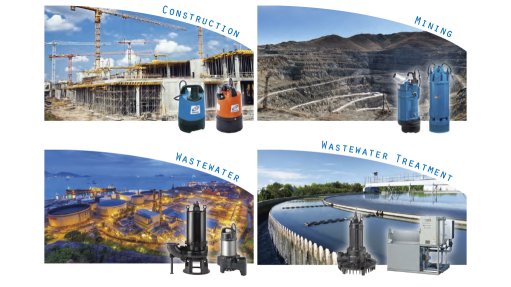
Tsurumi Pumps Africa is a specialist supplier of Japanese-engineered submersible pumping solutions, serving customers across the African continent.
VISIT SHOWROOM
We at Hawk High Pressure Pumps specialise in industrial pumps and pumping systems. Our high pressure washing equipment is locally manufactured and...
VISIT SHOWROOM
Announcements
What's On
Subscribe to improve your user experience...
Option 1 (equivalent of R125 a month):
Receive a weekly copy of Creamer Media's Engineering News & Mining Weekly magazine
(print copy for those in South Africa and e-magazine for those outside of South Africa)
Receive daily email newsletters
Access to full search results
Access archive of magazine back copies
Access to Projects in Progress
Access to ONE Research Report of your choice in PDF format
Option 2 (equivalent of R375 a month):
All benefits from Option 1
PLUS
Access to Creamer Media's Research Channel Africa for ALL Research Reports, in PDF format, on various industrial and mining sectors
including Electricity; Water; Energy Transition; Hydrogen; Roads, Rail and Ports; Coal; Gold; Platinum; Battery Metals; etc.
Already a subscriber?
Forgotten your password?
Receive weekly copy of Creamer Media's Engineering News & Mining Weekly magazine (print copy for those in South Africa and e-magazine for those outside of South Africa)
➕
Recieve daily email newsletters
➕
Access to full search results
➕
Access archive of magazine back copies
➕
Access to Projects in Progress
➕
Access to ONE Research Report of your choice in PDF format
RESEARCH CHANNEL AFRICA
R4500 (equivalent of R375 a month)
SUBSCRIBEAll benefits from Option 1
➕
Access to Creamer Media's Research Channel Africa for ALL Research Reports on various industrial and mining sectors, in PDF format, including on:
Electricity
➕
Water
➕
Energy Transition
➕
Hydrogen
➕
Roads, Rail and Ports
➕
Coal
➕
Gold
➕
Platinum
➕
Battery Metals
➕
etc.
Receive all benefits from Option 1 or Option 2 delivered to numerous people at your company
➕
Multiple User names and Passwords for simultaneous log-ins
➕
Intranet integration access to all in your organisation